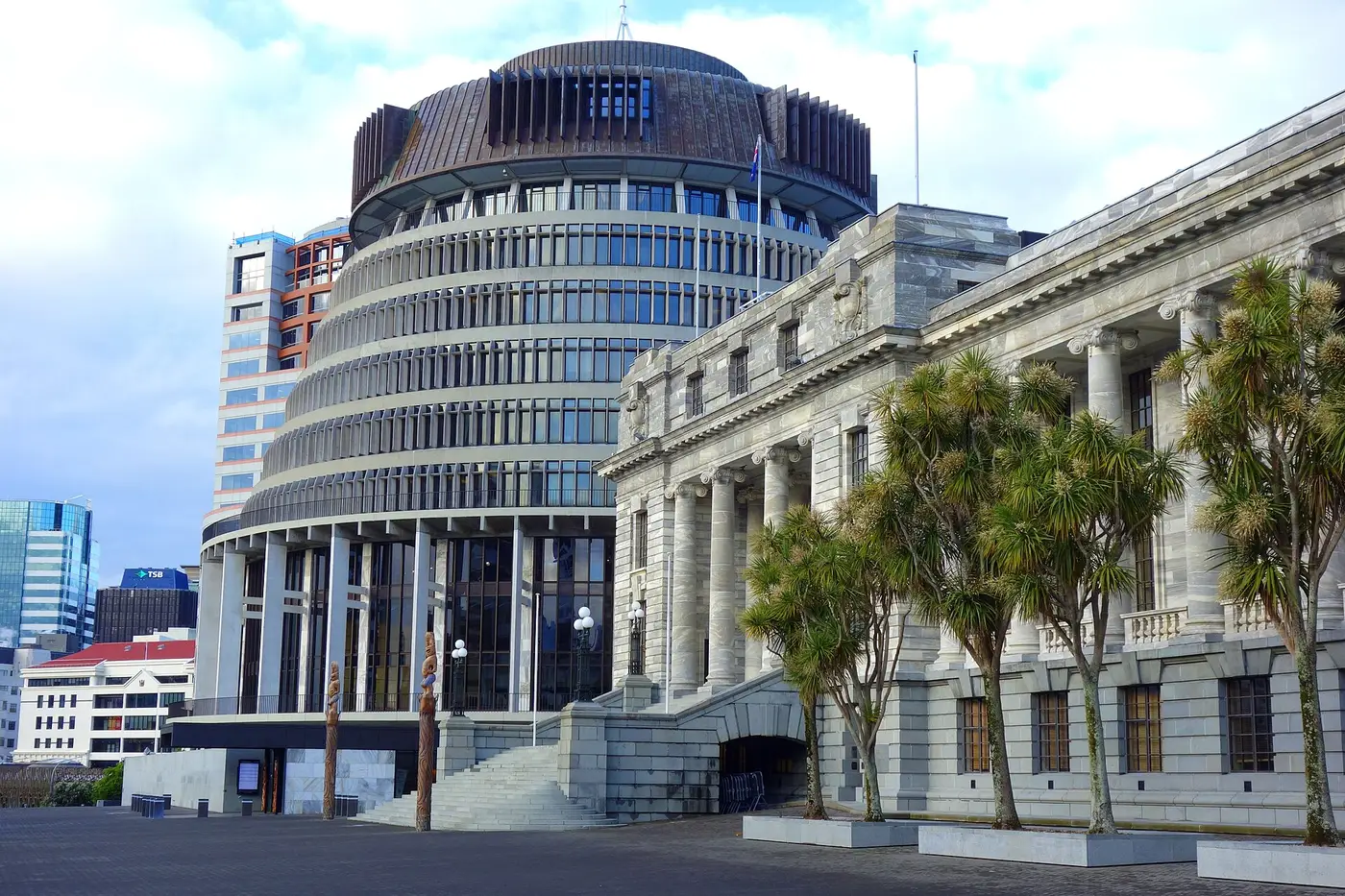
A new crypto offence: what the Omnibus Bill means for cash-to-crypto
The Government’s final anti-money laundering bill includes a power that could change how New Zealanders buy crypto. The AML/CFT (Omnibus) Amendment Bill would let the Government make buying or selling virtual assets above a set threshold an offence. According to most summaries, it is mainly aimed at cash-to-crypto, such as crypto ATMs.

By Eli Hylands
· 6 min read

No threshold has been set. The Ministry of Justice plans to consult on it in early 2027, a timing the Government’s own release links to the election (NZ Government release).
The Bill was announced on 28 August and introduced in early September 2026. Parliament dissolved on 1 October before it was debated, so the government formed after the 7 November election decides whether it goes ahead. If it passes in 2027 as officials expect, it takes effect a year after Royal assent (Simpson Grierson). Any limit is unlikely to apply before about 2028.
From an ATM ban to a threshold
The threshold replaces a much blunter plan. In July 2025, Associate Justice Minister Nicole McKee announced that crypto ATMs would be banned, alongside a $5,000 cap on international cash transfers (CoinDesk). Easy Crypto chief executive Janine Grainger welcomed the ban, saying the machines had grown quickly with high fees and little oversight. ATM operator CoinFlip, which runs about 120 machines here, called it a “step backward” (Decrypt).
A year later the Government changed course. “Cabinet has now considered the evidence and agreed that a blanket ban is not the right response at this time,” McKee said on 9 July 2026, while noting that “crypto ATMs present real risks, particularly where criminals use cash to move funds into virtual assets” (NZ Lawyer). The Beehive headline summed it up as “guardrails, not the guillotine”.
Instead, Cabinet agreed to regulation-making powers. They could set maximum cash thresholds for virtual asset transactions or, “if clear evidence of harm emerges in New Zealand”, ban cash payments for high-risk virtual assets altogether. Those powers are now in the Omnibus Bill.
“Guardrails, not the guillotine.”
What the offence would cover
The Bill sets up the offence, and regulations would fill in the numbers. Under the Bill as summarised by law firms:
- Virtual assets. Buying or selling virtual assets above a threshold set by regulation would be prohibited. Doing so knowingly or recklessly would be an offence (MinterEllisonRuddWatts).
- Remittance. Money transfer services could be barred from accepting cash above a threshold when the money is going overseas (Buddle Findlay).
- Evidence first. The Government says restrictions would be used “where there is evidence that restrictions are necessary to address criminal misuse”, and only after the Ministry consults affected users and providers.
Much is still unknown:
- The amount. No figure has been proposed.
- Cash only, or wider? Buddle Findlay and the Government’s release describe limits on cash. MinterEllisonRuddWatts describes the offence as covering the “purchase or sale of virtual assets above a prescribed threshold” without mentioning cash. The final regulations will decide whether bank-funded purchases are caught.
- Per transaction or per period. Nothing yet says whether a limit would apply to each purchase, each day or each month.
- “High-risk virtual assets”. The term has not been defined.
Why cash-to-crypto is the target
Cash going into crypto is hard to trace and easy for scammers to direct. New Zealand has about 200 crypto ATMs by one industry estimate, many in dairies, petrol stations and vape shops. The Banking Ombudsman has reported victims losing $31,500 to a fake job offer, and nearly $65,000 over six months to a fake investment, through these machines (Coin Edition).
Scams more broadly are a large and growing problem. A Netsafe and Global Anti-Scam Alliance survey estimates New Zealand’s scam losses at about $3 billion a year. About 11% of victims said they paid through a crypto exchange or digital currency (Netsafe/GASA).
In most scams the victim is a real person sending their own money, so they pass every identity check. Controls that act at the point of payment, such as cash limits, warnings, holds and freezes, are the ones that can stop the money leaving. That is the strongest case for a threshold.
What Australia has implemented
Australia has moved further and faster on crypto scams than New Zealand, and it is the closest guide to where our threshold could land:
- A cash limit on crypto ATMs. In June 2025 AUSTRAC imposed an A$5,000 cash limit, plus mandatory scam warnings and stronger customer checks. It had found that 85% of money from the top crypto ATM users involved scams or money mules, and that people over 50 made up about 72% of transaction value. It also refused to renew one operator’s registration and fined another (AUSTRAC).
- Bank limits on payments to exchanges. The big banks have set their own limits since 2023. CBA caps payments to crypto exchanges at A$10,000 a month (Benzinga), and Westpac may reject payments above A$10,000 a month to identified exchanges (CoinMarketCap). NAB declines payments to exchanges it considers high risk, and HSBC Australia blocks them entirely (Cointelegraph).
- A wider AML regime. Crypto exchanges have been registered under expanded AML/CTF rules since 31 March 2026, with travel-rule obligations from 1 July 2026 and a public register of providers (AUSTRAC).
- Licensing. The Digital Assets Framework Act 2026 brings crypto platforms into financial services licensing from about April 2027 (The Block).
The results so far are unclear. Reported investment scam losses fell from A$192 million in 2024 to over A$160 million in 2025 (Scamwatch), but no study has linked that fall to the limits. Sources also differ on whether the ATM limit applies per transaction or per day. That is exactly the kind of detail New Zealand’s consultation will need to settle.
What it means for registered crypto brokers
For brokers funded by bank transfer, everything depends on whether the limit is cash-only.
Registered brokers already carry a heavy compliance load. They are supervised by the Department of Internal Affairs, must verify customers on any one-off virtual asset transaction of $1,000 or more, and since June 2024 must send customer details with crypto transfers under the “travel rule” (MinterEllisonRuddWatts).
“I spent almost a year on our AML process alone,” says Eli Hylands, co-founder and AML compliance officer at Christchurch crypto broker Flow Crypto. “Compliance is still our biggest expense.”
If the limit is cash-only, it falls mainly on crypto ATMs and cash over-the-counter desks. Bank-funded purchases have already passed through a bank’s own checks and a broker’s identity verification, so they would be largely unaffected.
If it reaches all purchases, every broker in the country would be caught. A limit set too low could push buyers to offshore exchanges or peer-to-peer trades, where New Zealand’s wallet screening, scam warnings and freezes don’t reach. FATF has warned that offshore crypto providers create blind spots for regulators (FATF). That would move risk out of sight rather than reduce it.
Other changes in the Bill
The threshold sits alongside wider changes that also apply to crypto businesses:
- Lighter checks for low-risk customers. Simplified checks would be available for any customer a business reasonably assesses as low risk. Source-of-wealth checks would stop being mandatory in enhanced checks (Simpson Grierson). Crypto starts from a high-risk sector rating, so the relief may be smaller here than elsewhere.
- Temporary freezes. The Financial Intelligence Unit could freeze suspect transactions or accounts for up to 7 days with a judge’s or JP’s approval, extendable by the High Court (DLA Piper).
- UN sanctions screening. Every reporting business would have to screen for UN targeted sanctions.
- Higher penalties. Company penalties of up to $5 million or 10% of group turnover, and a maximum sentence for money laundering doubled from 7 to 14 years (Russell McVeagh).
What to watch
The early 2027 consultation is where the real decisions will be made. It needs to answer four questions:
- What is the threshold, and is it in line with Australia’s A$5,000?
- Does it apply only to cash, or to bank-funded purchases too?
- Is it per transaction, per day or per month?
- Which virtual assets count as “high-risk”?
Before that, the new government has to decide whether to pick up the Bill at all. Select committee submissions are expected in 2027, and they give the crypto industry its first formal chance to argue for a limit aimed at cash, where the scam evidence points, rather than at every purchase.
A cash threshold that is well designed could protect people at the moment they are most at risk. One that is too broad would add cost for legitimate customers and could push activity offshore, where no New Zealand rule applies.
Sources
- Buddle Findlay: AML/CFT reform, final omnibus bill
- NZ Government release: Final AML/CFT bill targets criminals, cuts red tape for Kiwis
- Simpson Grierson: AML omnibus reform, lifting or shifting the burden?
- CoinDesk: New Zealand wants to ban crypto ATMs
- Decrypt: New Zealand bans crypto ATMs, caps transfers
- NZ Lawyer: Government eschews crypto ATM ban
- MinterEllisonRuddWatts: Final amendment bill introduced to Parliament
- Coin Edition: Why New Zealand abandoned its crypto ATM ban
- Netsafe and GASA: State of Scams in New Zealand
- AUSTRAC: Crypto ATM operators put on notice
- Benzinga: Monthly limit on payments to crypto exchanges in Australia
- CoinMarketCap: Westpac’s A$10,000 monthly crypto exchange payment cap
- Cointelegraph: HSBC Australia blocks payments to crypto exchanges
- AUSTRAC: Travel rule reform guidance
- The Block: Australia passes crypto bill
- Scamwatch: Targeting Scams report
- MinterEllisonRuddWatts: DIA releases guidance for VASPs
- FATF: Understanding and mitigating the risks of offshore VASPs
- DLA Piper: Government introduces final stage of AML/CFT reform (2026)
- Russell McVeagh: AML/CFT reform, final bill introduced
This article is general information only and is not financial advice. Crypto-assets can be volatile, and blockchain transfers are generally irreversible.
Eli Hylands
Eli is the founder of Flow Crypto and editor of Flow News, covering crypto for New Zealanders.